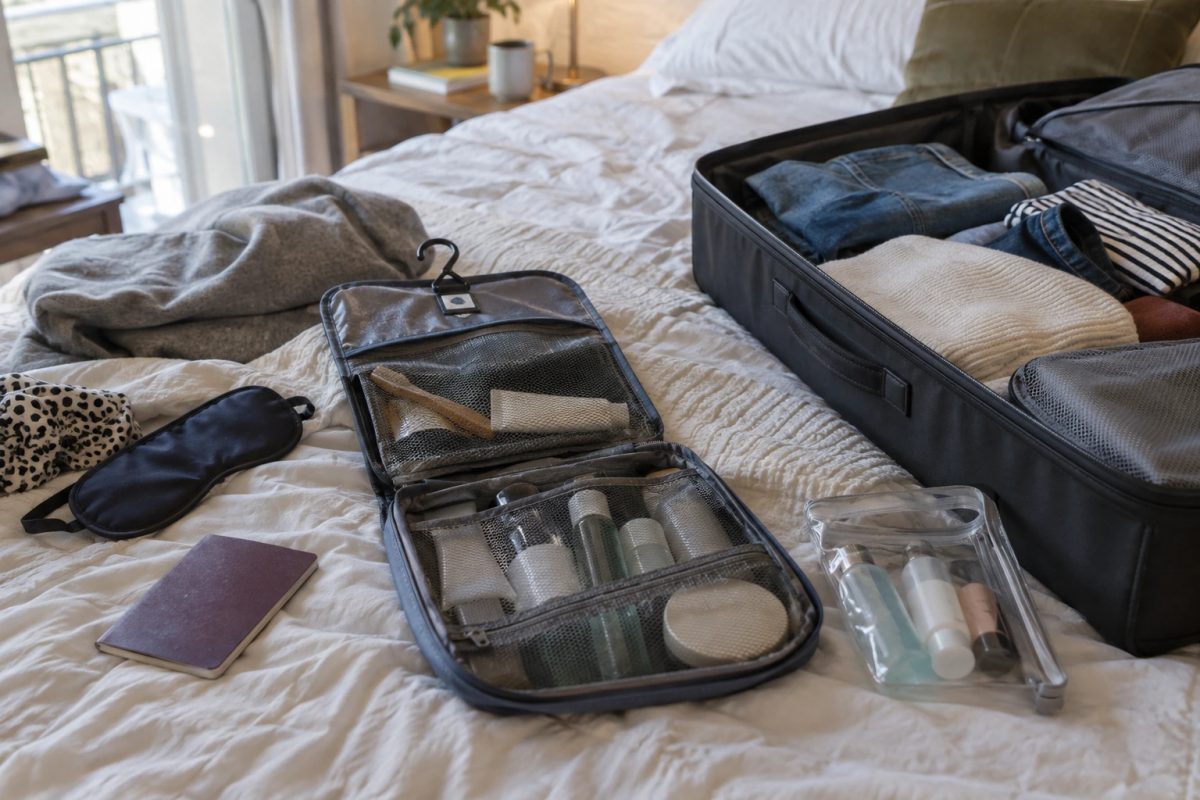
A useful toiletry packing list does more than remind you to bring toothpaste. It separates liquids from dry items, scales the routine to the length of the trip, and keeps the products you need in transit easy to reach. The goal is not to pack your entire bathroom. It is to recreate the smallest version of your normal routine without leaving behind anything essential.

Quick toiletry packing list
Start with this core list, then add only the optional items that match your routine and destination.
- Toothbrush, toothpaste, floss, and any dental appliance supplies
- Face cleanser, moisturizer, sunscreen, and lip balm
- Shampoo, conditioner, body wash, and deodorant
- Hairbrush or comb, hair ties, and clips
- Razor and shaving product, if used
- Basic makeup and makeup remover, if used
- Contacts, case, and solution or backup glasses
- Prescription medication and routine health items
- Period products
- Small first-aid basics appropriate for the trip

Use two toiletry zones, not one overfilled bag
The easiest system is to divide toiletries by how you will use them. Put liquids that must be screened in one accessible clear bag. Put dry toiletries, tools, and products you will use after arrival in a separate organizer. This prevents a security checkpoint from turning into a full unpacking session.
Zone 1: carry-on liquids
For US airport screening, TSA’s liquids rule allows one quart-size bag of liquids, aerosols, gels, creams, and pastes in carry-on luggage. Each container must hold 3.4 ounces or 100 milliliters or less. The container size matters, not how much product remains inside it. Review the current TSA liquids guidance before departure, especially for international or connecting itineraries.
Common toiletry liquids include toothpaste, liquid foundation, mascara, gel deodorant, shampoo, conditioner, lotion, sunscreen, perfume, and contact-lens solution. Solid versions can reduce pressure on the liquids bag, but only choose them if they work for your routine.
Zone 2: dry toiletries and arrival items
Keep a second organizer for your toothbrush, floss, comb, hair ties, solid deodorant, bar soap, powder products, cotton swabs, period products, and other items that do not need to go in the carry-on liquids bag. A hanging organizer is especially useful in small hotel bathrooms where counter space is limited.
Complete toiletry checklist by routine
Dental care
- Toothbrush or electric toothbrush and charger
- Toothpaste
- Floss or floss picks
- Retainer, night guard, or aligner case
- Denture or orthodontic supplies, if required
Pack dental items together in a washable pouch rather than loose beside skincare. Let the toothbrush dry before closing it into a cover, and clean reusable covers between trips.
Shower and body care
- Shampoo and conditioner
- Body wash or bar soap
- Deodorant
- Body lotion
- Razor and shaving product
- Washcloth or exfoliating item, if it is part of your normal routine
Do not automatically decant every full-size product. Check what the accommodation supplies, then pack only the formulas you care about. A short trip may require one or two washes, not a week’s worth of shampoo.
Skincare
- Cleanser
- Moisturizer
- Daily sunscreen
- Lip balm
- Any treatment you use consistently
- Makeup remover, if needed
Travel is rarely the right time to build a complicated new skincare routine. Keep the steps familiar and prioritize products that prevent discomfort: cleanser, moisturizer, sunscreen, and any established treatment you should not abruptly stop.
Hair care
- Hairbrush or comb
- Hair ties, clips, or pins
- Shampoo and conditioner
- One styling product, if you normally use it
- Heat protectant only if a heated styling tool is coming
- Satin scrunchie, bonnet, or pillowcase if it meaningfully supports your routine
Keep this list focused on hair care rather than turning the toiletry bag into a complete styling station. Styling tools and destination-specific voltage decisions belong in a separate travel hair setup.
Makeup and grooming
- Daily complexion product
- Concealer
- One cheek product
- Mascara and brow product
- One or two lip options
- Only the brushes or applicators needed for those products
- Tweezers, nail file, or small grooming tool as needed
Pack the routine you actually wear, not every possible look. Multi-use color products and a small number of compatible shades reduce both bulk and decision fatigue.
Contacts, medication, and health items
- Prescription medication
- Contact lenses, case, solution, and backup glasses
- Pain relief or allergy medication normally used
- Bandages and a small amount of first-aid care appropriate to the itinerary
- Period products
- Any medically necessary device or supply
Keep essential medication in your personal item or carry-on rather than in a checked bag. TSA permits medically necessary liquids, medications, and creams in excess of 3.4 ounces or 100 milliliters in reasonable quantities for the trip, but they should be declared to the officer for screening. TSA recommends labeling medication to make screening easier. Check the current TSA medical guidance, and confirm destination-specific rules when crossing borders.
How much product should you bring?
Estimate use by routine, not by bottle capacity. Count the number of showers, skincare applications, and wash days expected, then add a small buffer. A three-ounce bottle is the carry-on maximum for many common toiletries, not the amount every traveler needs.

| Trip length | Practical approach |
|---|---|
| 1–3 nights | Use samples, very small containers, or products already near travel size. Pack one streamlined routine. |
| 4–7 nights | Decant frequently used liquids and keep low-use items in smaller pots or tubes. |
| 8+ nights | Plan laundry and replenishment. Buying a basic item after arrival may be easier than carrying excess volume. |
A five-step toiletry packing system
- Lay out the real routine. Pull out only what you used during a normal day and add trip-specific essentials.
- Remove duplicates. Choose one cleanser, one moisturizer, one deodorant, and one primary hair routine unless the itinerary creates a genuine second need.
- Separate liquids immediately. Do not wait until the suitcase is packed to discover that the clear bag will not close.
- Decant and label. Label every reusable bottle with the product name. Avoid relying on container color or memory.
- Pack by access. Medication, contact supplies, toothbrush, and in-transit essentials belong where you can reach them without unpacking the entire bag.
How to prevent toiletry leaks

- Test refillable bottles with water before using them for expensive products.
- Leave a little empty space instead of filling flexible bottles to the rim.
- Clean product from the threads before closing caps.
- Place likely leak risks inside a secondary washable pouch.
- Keep powders and electronics away from liquids.
- Store containers upright when the luggage design allows it.
Do a final leak check the night before travel. A bottle that was closed in a hurry immediately before leaving is more likely to carry product around the cap or be packed without testing.
What not to pack
- Full-size backups for products available at the destination
- Multiple products that perform the same job
- Unlabeled decanted liquids
- New treatments that have not been tested at home
- Every makeup shade or styling option you own
- Nonessential “just in case” items that exceed the actual risks of the trip

Final packing check
Close every pouch and place it inside the luggage before deciding the list is finished. The system works only if the clear liquids bag closes comfortably, the main organizer fits without being crushed, and essential items remain accessible. Photograph prescriptions or important product labels when useful, review current security and destination rules, and remove anything that does not support the trip you are actually taking.
Frequently asked questions
What toiletries count as liquids for carry-on travel?
TSA treats liquids, aerosols, gels, creams, and pastes as liquids for screening. Common examples include toothpaste, mascara, lotion, sunscreen, gel deodorant, shampoo, conditioner, and perfume.
What toiletries should go in a carry-on?
Keep medication, contact-lens supplies, a toothbrush, essential skincare, and anything needed during transit or immediately after arrival in your carry-on. Pack carry-on liquids according to the current security rules.
How many toiletries do I need for a one-week trip?
Pack the number of uses your routine requires rather than defaulting to full travel-size bottles. Count expected showers, wash days, and skincare applications, then add a small buffer.
How do I keep toiletries from leaking in my luggage?
Test reusable bottles, clean the cap threads, avoid filling flexible containers to the rim, close every lid firmly, and place higher-risk liquids inside a secondary washable pouch.
Can liquid medication exceed 3.4 ounces in a carry-on?
TSA allows medically necessary liquids, medications, and creams above 3.4 ounces or 100 milliliters in reasonable quantities for the trip. Declare them for screening and check current TSA and destination-specific guidance before travel.