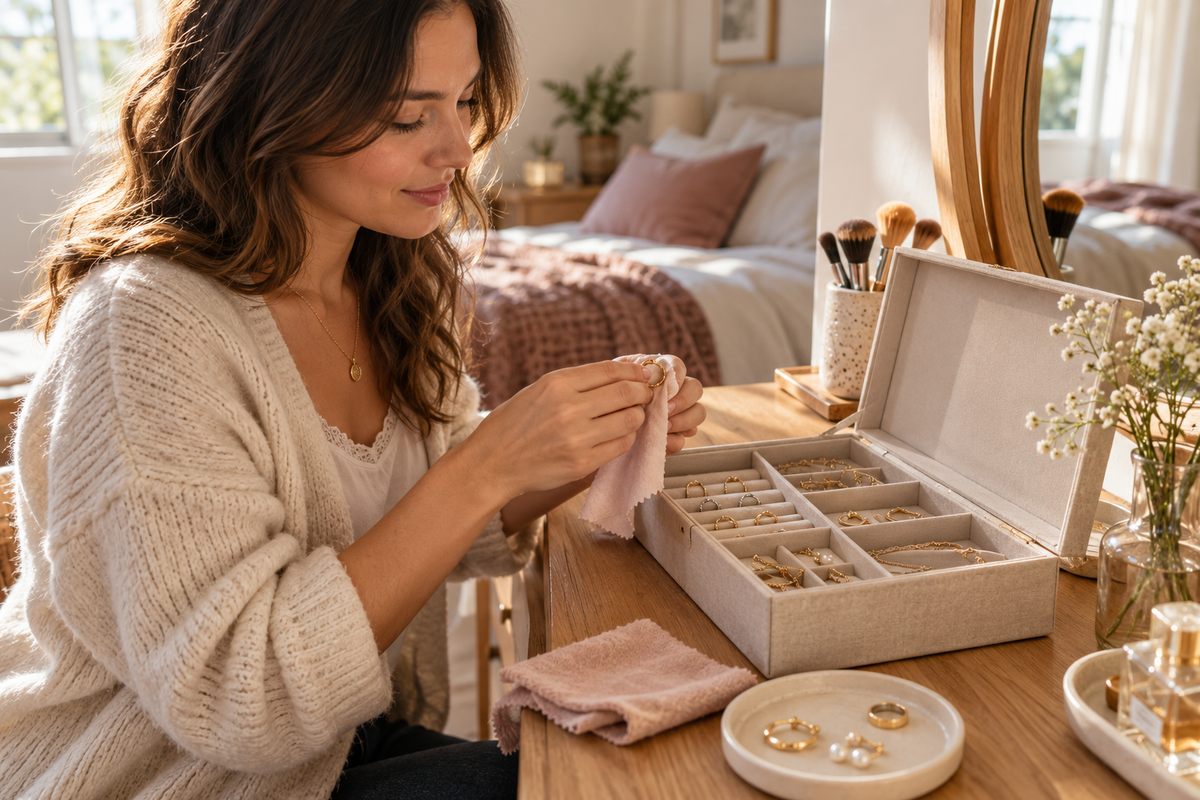
Jewelry care is easier when cleaning and storage are treated as one routine. The goal is not to polish every piece constantly or buy a large organizer. It is to keep pieces separated, dry, easy to see and matched with a care method that is appropriate for their material.
The practical formula is audit → separate → store → clean → protect. This keeps everyday pieces accessible while reducing tangles, scratches, moisture exposure and forgotten items.
How should you store jewelry at home?
Store jewelry in a clean, dry place away from direct sunlight, bathroom humidity and products such as perfume, hairspray and lotion. Use separate compartments or soft pouches so chains do not knot and harder pieces do not rub against softer surfaces. Close clasps before putting necklaces away.
No single storage method suits every collection. A shallow covered tray works for a small group of rings and earrings. A box with vertical necklace storage is more useful when tangling is the main problem. A hanging organizer can save dresser space, but delicate or valuable pieces may still need more protected individual storage.
1. Audit what you actually wear
Empty the collection onto a clean, soft surface and sort it into everyday, occasional, sentimental, repair and release categories. Look for loose stones, weak clasps, bent posts, damaged plating and knotted chains. Do not clean or wear a structurally damaged piece until it has been assessed appropriately.
This is also the moment to remove empty boxes and organizers that no longer match the collection. Like the Weekly Wardrobe Reset, the useful outcome is visibility—not perfect display styling.
2. Separate by material and shape
Keep necklaces fastened and separated from one another. Give earrings defined pairs, keep rings in slots or small compartments, and avoid piling bracelets on top of delicate chains. Store pieces that scratch easily away from harder metals and stones.
If a piece came with brand or jeweler care instructions, keep those instructions with it. Costume jewelry, plated jewelry, sterling silver, solid gold, pearls and porous stones can require different handling. “Jewelry-safe” is not a universal claim for every material.
3. Choose storage for the collection you own
Start with the pieces, not the organizer. Count necklace lengths, bulky bracelets, watches, rings and pairs of earrings. Then choose enough compartments for separation with a little room for normal rotation. Buying a huge box first often creates unused space while still failing to solve necklace tangles.
- Small everyday collection: a covered compartment tray plus a small travel roll.
- Mixed everyday collection: a divided box with necklace hooks, ring rolls and open sections.
- Limited surface space: a hanging organizer, with extra protection for delicate pieces.
4. Clean gently—and only when the method fits
Begin with a dry, soft cloth to remove fingerprints and surface residue. A treated polishing cloth may be suitable for metals named by its manufacturer, but it can be wrong for certain plated, oxidized, coated or intentionally finished pieces. Follow both the jewelry maker’s guidance and the cloth instructions.
Do not assume toothpaste, baking soda, vinegar, alcohol or an ultrasonic cleaner is safe. Abrasive or chemical DIY methods can scratch surfaces or affect finishes and stones. When the material is unknown, or a piece is valuable, sentimental or damaged, use a professional jeweler.
5. Protect pieces between wears
Put jewelry on after skincare, fragrance, makeup and hair products have settled, and remove it before showering, swimming, exercise, sleep or household cleaning when the maker recommends doing so. Wipe pieces before storage if they picked up moisture or product residue.
Anti-tarnish storage strips can be one supporting tool for compatible metal jewelry in enclosed storage; they do not replace appropriate cleaning or material-specific care. Replace them according to the product directions.
The Jewelry Care + Storage System
The System below separates stable care roles from specific products. Choose the version that matches the size of your collection and how often you travel.
Which setup fits your wardrobe?
Tap one choice below. We’ll open the matching version of the The Jewelry Care + Storage System.
-
Small Everyday Collection
A covered tray, compatible cloth, optional tarnish support and compact travel roll for a tight edit.
-
Mixed Collection
A divided dresser box with dedicated storage, a larger polishing cloth and a separate travel roll.
-
Small-Space + Travel Rotation
A hanging home organizer plus a pouch-style travel binder for a larger rotating collection.
What happens next? Your choice opens the full System, where you can select products and save your choices.
Three ways to build the system
Small Everyday Collection
Use a covered tray for visible separation, one compatible polishing cloth, an anti-tarnish option where appropriate and a compact travel roll. This is the best starting point when you wear the same small group repeatedly.
Mixed Collection
Use a larger divided box with dedicated necklace, ring and earring storage. Keep cleaning simple and store travel pieces in a separate roll so the main organizer does not need to be repacked.
Small-Space + Travel Rotation
Use a hanging organizer at home and a pouch-style travel binder when you rotate more pieces. Keep delicate or high-value items in the protection recommended by their maker rather than relying only on clear pockets.
How often should jewelry be cleaned?
There is no universal schedule. Everyday pieces may need a gentle wipe more often because they contact skin and products; occasional pieces may only need inspection before and after wear. Clean when residue is present, using the least aggressive method appropriate for the exact material.
How to pack jewelry without tangles
Edit the selection first. Pack only pieces that work with several outfits, fasten necklaces, separate pairs and use dedicated attachment points or individual pouches. Keep valuable jewelry with you according to your own security needs rather than placing it in checked luggage.
The same “roles, not extras” logic appears in the Weekend Personal Item Packing guide and the 5-Day Summer Carry-On guide.
What not to buy
- a large organizer before counting the types of pieces you own
- one universal cleaning liquid for mixed, unidentified materials
- duplicate travel cases when a small pouch already separates pieces safely
- open display stands for pieces that need protection from dust, light or humidity
- specialty tools for repairs that should be handled by a jeweler
Common jewelry-storage mistakes
- leaving necklaces unclasped in one compartment
- storing jewelry in a humid bathroom
- putting pieces away with lotion, perfume or moisture on them
- mixing hard and delicate pieces without separation
- polishing plated or intentionally oxidized pieces without checking care instructions
- packing too many options for one trip
Frequently asked questions
Can I store all jewelry together?
Not in one undivided pile. Separate pieces by shape, hardness, finish and care needs to reduce tangling and surface contact.
Are polishing cloths safe for every piece?
No. Use one only when its instructions and the jewelry maker’s guidance confirm compatibility with the material and finish.
Should jewelry be stored in the bathroom?
A dry bedroom or closet location is generally more practical because bathrooms experience frequent humidity changes.
How do I keep necklaces from tangling while traveling?
Fasten each necklace and secure it to an individual hook, loop, card or pouch inside a dedicated organizer rather than dropping several chains into one pocket.