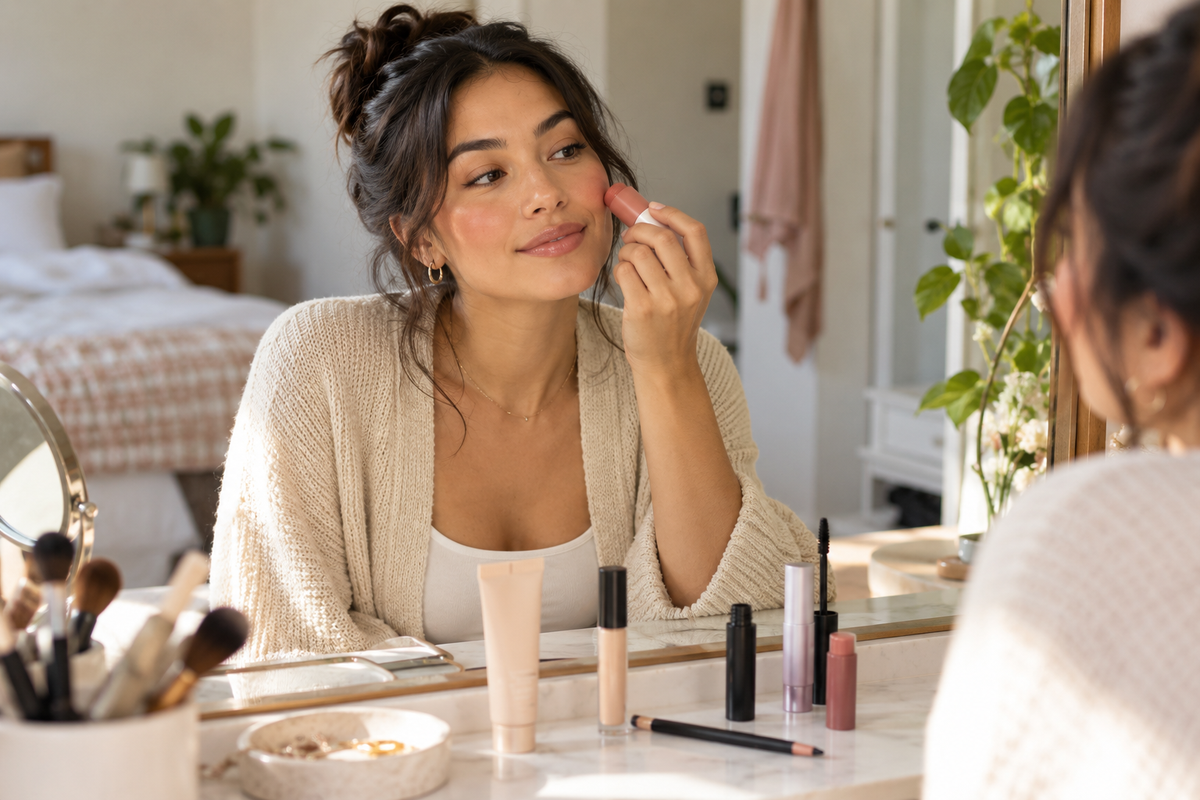
A useful everyday makeup routine is not a miniature version of full glam. It is a short sequence of decisions that helps you look more awake, even and defined without opening every product you own.
The most realistic formula is prep → complexion → definition → color → finish. Each role has a purpose, but not every role requires a separate purchase or a full layer of product. Your skincare can be the prep. Concealer can be the entire complexion step. A cream cheek color and tinted balm can be applied without brushes.
What belongs in a 10-minute everyday makeup routine?
For most people, the practical core is one complexion option, one or two definition products, one cheek color and one lip product. Start with skincare and daytime sun protection that already suit your skin. Add setting product only when wear time, weather or your preferred finish makes it useful.
- Prep/base: settled skincare; separate primer only if it solves a known problem.
- Complexion: concealer, a light skin tint, or both—but applied only where needed.
- Definition: brow pencil or gel and mascara.
- Color: one blush, bronzer or multi-use cream in a shade that works for you.
- Finish: comfortable lip color; optional setting spray or powder.
This is five roles, not fifteen mandatory products.
Step 1: begin with a base you already trust
Do your normal morning skincare first and give it enough time to settle. Pilling often happens when several layers are applied too quickly or when incompatible textures are stacked. The answer is not automatically another primer.
If your moisturizer and daytime sun protection sit well under makeup, they are enough for an everyday routine. Add primer only when it has a specific job, such as smoothing one area, reducing visible shine or helping makeup grip during a long day. Do not treat makeup with SPF as a reliable replacement for the amount of sunscreen you normally need.
Step 2: decide how much complexion coverage today requires
The fastest approach is targeted coverage. Look at the center of the face, under-eye area and any redness or discoloration you personally want to soften. Apply a small amount of concealer, blend the edges and reassess before adding more.
A skin tint or light foundation is useful when you want more uniform coverage, but it should still match your skin tone, undertone and preferred finish. Online listings often open on one specific shade. Never assume the shade shown in a product card is the recommendation for every reader.
Concealer-only versus skin tint
Choose concealer-only when most of your skin looks the way you want and only a few areas need attention. Choose skin tint when unevenness is distributed more broadly or you simply prefer an all-over finish. For a ten-minute routine, you rarely need a heavy base plus heavy concealer.
Step 3: use definition where it changes the face most
Brows and lashes usually create more visible structure per minute than a complicated eye look. Brush brows into place, then fill only obvious gaps with short strokes. Use a brow shade that relates to your actual brow hair; the product color shown in the System is an example listing, not a universal match.
For lashes, one controlled coat of washable mascara is enough for most everyday routines. Wipe excess from the brush if needed, work close to the roots and stop before repeated coats create clumps. If mascara irritates your eyes or does not suit the day, skip it and keep the brow step.
Step 4: add one source of color
Complexion products can flatten natural variation, so a small amount of cheek color often makes the routine look more complete. Cream blush or a multi-stick is efficient because it can be blended with clean fingers, but powder works just as well if that is what you apply reliably.
Place color gradually and assess it in daylight. Depth and undertone matter: the same blush can look muted on one complexion and very strong on another. The goal is not to copy the exact shade in a product image; it is to find the role that makes your face look balanced.
Step 5: finish with the product you will actually reapply
A tinted balm, sheer lipstick or comfortable gloss fits an everyday routine because it is easy to refresh. Choose one lip category and keep it accessible instead of carrying several nearly identical colors.
Setting spray or powder is optional. Add it when you need more wear, have areas that become shiny, or know your makeup moves during the day. If your makeup already lasts as long as necessary, the extra step is not improving the system.
The 10-Minute Everyday Makeup System
The System below separates stable roles from individual products. Start with the version closest to your real morning, then remove any step that does not earn its place.
How to keep the routine within ten minutes
- Keep the daily edit separate. Store experimental colors and occasion makeup away from the five everyday roles.
- Use products in the same order. Repetition removes searching and second-guessing.
- Apply less, then reassess. Correcting excess foundation, brow pencil or blush costs more time than adding a little.
- Favor finger-friendly formats where appropriate. Fewer tools means less setup and cleaning.
- Stop when the role is complete. Once the complexion looks even enough, move on.
How to choose your version
Minimal / 5-Minute
Use targeted concealer only where wanted, choose the brow-or-mascara step with the greatest impact, tap on cheek color and finish with balm. This version is ideal for low-key days and anyone who dislikes the feeling of multiple layers.
Everyday 10-Minute
Use settled skincare, targeted complexion coverage, light brow definition, mascara, one cheek product and a comfortable lip. This is the default balanced routine.
Polished 15-Minute
Add a little more complexion refinement and deliberate brow work. If wanted, use a neutral eye product you already own and set only the areas or days that need it. Polished should mean more intentional—not dramatically heavier.
What beginners should buy first
Do not buy the entire routine at once. Begin with the role that currently creates the most friction. If redness or under-eye darkness bothers you, start with complexion. If your face feels undefined, try brows or mascara. If the result looks flat, add cheek color. If you already own products in these roles, test the routine with them before replacing anything.
Shade matching deserves more attention than brand collecting. Whenever possible, check swatches across several skin tones, confirm the retailer’s current shade name and return policy, and test complexion products in natural light.
What you can skip
- a separate primer when your skincare already supports makeup
- full-coverage foundation for an ordinary light-coverage goal
- multiple brow products in one short routine
- an eye-shadow palette when mascara or one neutral shade is enough
- contour, bronzer and blush all together unless you genuinely use them
- setting spray or powder when longevity is not a problem
- large brush sets when your chosen formats need only fingers or one tool
Keep the system ready for the week
Once a week, remove products you did not use, clean the tools that touched your face and check whether anything is running low or past its usable condition. The same small maintenance idea appears in the confirmed Weekly Wardrobe Reset: prepare what you already own before assuming you need more.
If you later turn this into a travel edit, keep the same five roles and reduce duplicates rather than rebuilding the routine from zero. The 5-day carry-on guide uses the same role-first logic for packing.
Frequently asked questions
What products do I need for a 10-minute makeup routine?
Start with one complexion option, brow product or mascara, one cheek color and one lip product. Use your existing skincare as prep and add setting product only if longer wear is a real need.
Can I do everyday makeup in five minutes?
Yes. Use targeted concealer, choose either brows or mascara, add quick cheek color and finish with tinted balm. Skip steps that do not noticeably improve the result for you.
Do I need both foundation and concealer?
No. Many everyday routines work with concealer only. Add a skin tint or light foundation when you want more even all-over coverage.
Is setting spray necessary for everyday makeup?
Not automatically. Use it when wear time, weather or makeup movement is a known problem. If your routine already lasts long enough, skip it.