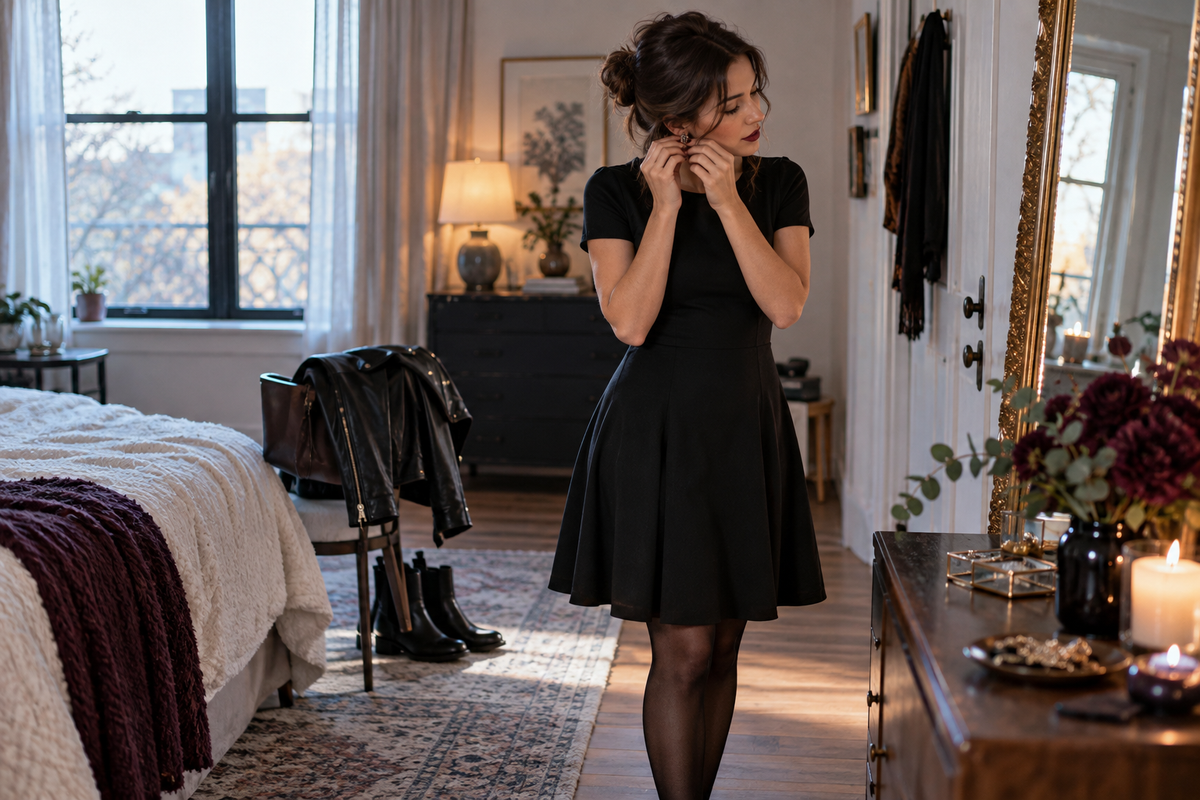
One black dress can support several Halloween outfits without becoming a costume purchase. The useful change comes from styling roles around it: accessory, shoe, beauty and outer layer. Keep the dress constant and change the cues that determine how the outfit reads.
Use the formula black dress → accessory → shoe → beauty → outer layer. This is different from a general last-minute costume formula because the starting garment never changes. The goal is to learn how far one dress can travel through deliberate styling.
The short answer
Choose one black dress you already own, then give each look one dominant cue. Cat ears and liner create a minimal cat look. Lace and a berry lip create dark romance. Silver details and boots suggest a witch-inspired direction. A structured shoe and refined layer create a polished party outfit. You do not need five dresses—or a full costume.
Start with the right black dress
The best base is not the most dramatic dress. It is the one that fits comfortably, works with your venue and leaves enough visual space for accessories. A simple knit, slip, wrap, shirt or fit-and-flare dress can all work.
- Simple knit dress: flexible for casual and layered looks.
- Slip dress: naturally supports dark-romantic and evening styling, with a layer for coverage or warmth.
- Wrap dress: polished enough for dinner and easy to redirect with jewelry or makeup.
- Shirt dress: strong for graphic, minimal or slightly structured interpretations.
- Fit-and-flare dress: works with loafers, boots and more playful accessories without needing a costume silhouette.
Check the hem with the shoes and coat you intend to wear. If the dress already has lace, hardware or an unusual neckline, reduce the number of added cues.
Change the accessory before changing the dress
An accessory near the face can completely redirect the same black base. The clearest options are usually the smallest: a cat-ear headband, black lace gloves, a narrow ribbon, silver jewelry, a dark scarf or one structured hair accessory.
Choose one dominant accessory. Several themed pieces can make the outfit feel like a costume kit rather than an intentional styling decision. If you already own something that creates the cue, use it before buying a novelty alternative.
Use shoes to control the mood
Shoes affect both proportion and character. Ankle boots add weight and weather coverage. Loafers make the dress feel graphic, polished or slightly preppy. A low evening heel can refine the same base for a hosted party. Clean black sneakers can make the minimal look more casual.
Do not choose shoes for character accuracy if they make the dress hem awkward or the event uncomfortable. The accessory and beauty cue do more recognition work than the shoe.
Let beauty reinforce—not compete with—the outfit
Each direction needs one beauty decision: graphic liner, a berry lip, a smoky eye, sleek hair or soft waves. Use ordinary cosmetics as labeled and keep the supporting features familiar.
The published Easy Halloween Makeup Ideas guide explains how to create a focal feature without special-effects makeup. Use that routine to support the dress rather than inventing a second, unrelated theme on the face.
Add an outer layer that belongs to the idea
Outerwear should not hide the outfit’s logic. A leather jacket gives the dress sharper texture and can support a cat, dark-romantic or polished interpretation. A long black coat preserves a controlled vertical line. A tailored blazer makes the dress suitable for dinner or a hosted event.
For more ways to balance a leather layer with dresses and other wardrobe basics, see the existing Leather Jacket Outfit Ideas guide.
5 Halloween Looks From One Black Dress
The System below keeps the dress fixed while changing four supporting roles. Product cards appear only where a specific accessory, beauty item, shoe or layer is genuinely useful.
Look 1: Witch-inspired
Use the black dress with silver or dark-stone jewelry, ankle boots and a controlled smoky or graphic eye. Add a long black coat if the weather requires it. The look comes from the elongated dark line and restrained mystical details; a novelty hat is not required.
Keep jewelry concentrated around one area. If the neckline already has detail, use earrings or a ring instead of adding a large necklace.
Look 2: Vampire-inspired
Pair the dress with one dark-romantic accessory, a refined black shoe and a deep berry lip. A structured coat adds polish. Keep complexion and eye makeup controlled so the lip and silhouette remain the focal points.
This is an inspired direction rather than a replica of a fictional character. Skip branded capes, logos and copied costume details.
Look 3: Black cat / minimal costume
Add simple cat ears, loafers or ankle boots and extended black liner. The dress supplies the entire body of the outfit, so the headband can remain small. A leather jacket works for cold weather but is not necessary indoors.
Do not add a tail, gloves, collar, face paint and multiple jewelry cues unless the event genuinely calls for a fuller costume. One clear accessory is enough for the minimal version.
Look 4: Dark romantic
Use lace gloves or a ribbon, elegant black shoes, a berry lip and softly polished hair. Add a leather jacket for texture contrast or leave the dress uncovered for a cleaner line. The lace should be the dominant texture, not one of several competing details.
This version works especially well when the dress itself is simple. If the dress already has lace, replace the gloves with smooth metal jewelry or a ribbon.
Look 5: Polished Halloween party
Combine the dress with refined jewelry, loafers or a trusted low heel, clean evening makeup with one dark accent, and a tailored coat or leather jacket. This is the least costume-like direction. It should still look appropriate at dinner after the seasonal accessory is removed.
A structured shoulder bag can support the polish, but it is not a required role in the System. Use the bag you actually need for the event.
How to make the five looks genuinely different
Changing lipstick alone does not create five outfits. Shift at least two supporting roles each time:
- change the dominant accessory
- change the shoe category or visual weight
- move the beauty focal point between eyes and lips
- change hair structure from sleek to soft
- add or remove an outer layer with a distinct texture
The black dress should remain recognizable as the same garment. That is the point: variation comes from styling decisions, not more wardrobe volume.
What to buy—and what to skip
Before shopping, lay out the dress, two shoe options, outerwear and the accessories you already own. Photograph each direction. Buy only the missing cue that makes a look readable.
- Useful potential add-ons: one headband, one lace accessory, one beauty product you will reuse, or a weather-appropriate layer already compatible with your wardrobe.
- Usually unnecessary: a second black dress, a full accessory kit, character-branded replicas, costume-only shoes or several near-identical dark lip products.
How to adapt for cold weather
Add opaque tights, a thin base layer where the dress allows it, weather-ready boots and a coat that continues the color story. Keep the main recognition cue visible above the coat line. A headband, earrings, hair detail or lip color remains readable when most of the dress is covered outdoors.
Reset the dress after Halloween
Remove accessory snags carefully, check the garment’s care label and return the dress to its normal rotation. Store costume-like add-ons together so they do not permanently occupy everyday wardrobe space. The success of this System is that the core dress remains useful after October.
Do not buy five Halloween outfits. Keep one black dress fixed, then change the accessory, shoe, beauty focal point and outer layer. Five clear directions can come from one garment when each supporting role has a specific job.
Frequently asked questions
What Halloween costumes can I make with a black dress?
A black dress can support witch-inspired, vampire-inspired, minimal black cat, dark-romantic and polished Halloween-party directions by changing accessories, shoes, makeup and outerwear.
How do I make a black dress look like a Halloween outfit?
Add one recognizable accessory, choose a controlled beauty cue and use shoes and outerwear that support the same direction. Avoid stacking several unrelated novelty pieces.
Do I need to buy a costume if I own a black dress?
Usually not. Start with the dress and the shoes, layers and accessories you already own. Buy only one missing cue if the direction is not recognizable.
How can I wear a black dress for a cold Halloween night?
Add opaque tights, a thin compatible base layer, weather-ready boots and a dark coat or leather jacket. Keep the main cue visible near the face.