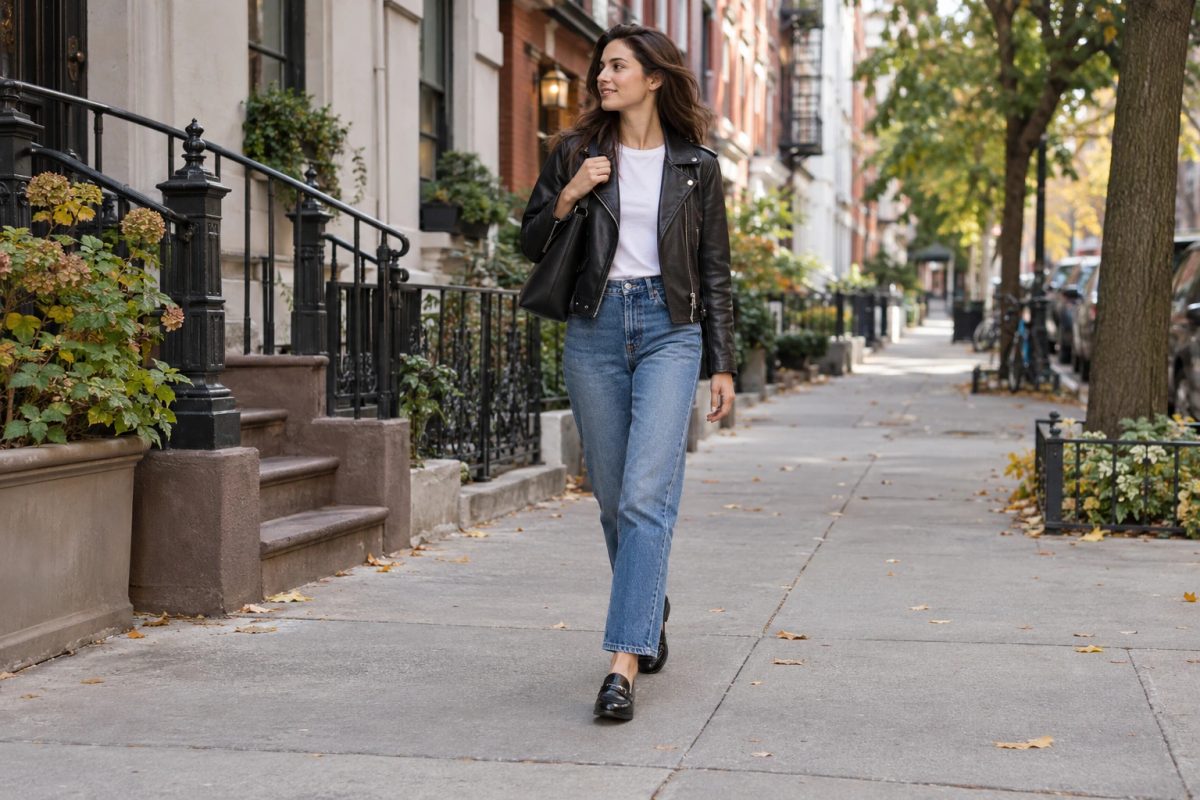
A leather jacket can work like a shortcut to a finished outfit. It adds structure to soft layers, gives simple basics a clearer point of view, and can move between casual, work-adjacent, and evening looks. The key is choosing the right silhouette and repeating a few reliable outfit formulas instead of treating the jacket as a statement piece that only works one way.
This guide focuses on practical leather jacket outfit ideas for women, including genuine and faux-leather options. Use the formulas as frameworks: adjust the colors, footwear, and proportions to match your wardrobe and the way you actually dress.

The quick formula
The easiest starting point is:
Leather jacket + simple base layer + relaxed or straight bottom + one polished finishing piece.
The base layer keeps the outfit calm. The jacket provides structure. The bottom balances the jacket’s shape, and the finishing piece—such as a streamlined shoe, belt, or bag—makes the combination feel intentional.
Choose the jacket shape before building outfits
Different leather jacket silhouettes create different proportions. Before planning outfits, decide which role you want the jacket to play.
- Classic moto: visible hardware, an angled zip, and a defined shoulder. It works well when the rest of the outfit is simple.
- Collarless jacket: cleaner neckline and fewer visual details. It is easier to pair with workwear, knit dresses, and minimal outfits.
- Scuba or racer style: streamlined front and close fit. It gives structure without as much hardware as a traditional moto.
- Cropped jacket: ends around the waist and works naturally with high-rise bottoms, fuller skirts, and dresses.
- Oversized bomber: creates a relaxed top-heavy proportion that pairs best with a simpler or more fitted base.
Fit matters more than the trend label. Check shoulder placement, sleeve length, and whether the jacket can close comfortably over the layers you plan to wear. If you want to use it through cooler weather, test it over a medium-weight knit rather than a thin T-shirt alone.
Three useful leather-jacket directions
These current options represent three different wardrobe roles rather than three near-identical recommendations.
Best role: polished minimal outfits. The collarless shape is a useful alternative when a hardware-heavy moto jacket feels too casual or visually busy.
Best role: streamlined everyday layering. The scuba-style silhouette fits naturally into simple jeans, trouser, and dress formulas.
Best role: an accessible classic moto look. The visible moto details make it the strongest choice when the jacket is meant to be the main structured element in the outfit.
1. Leather jacket + white T-shirt + straight-leg jeans
This is the most dependable leather jacket formula because each piece has a clear role. The T-shirt creates a clean base, straight-leg jeans keep the silhouette balanced, and the jacket adds contrast and structure.
Choose a T-shirt that sits close enough to the body to avoid extra bulk under the jacket. A slightly cropped or neatly tucked tee helps define the waist. Finish with loafers or ankle boots for a polished version, or minimal sneakers for a more casual one.
Proportion note: if the jacket is cropped, use mid- or high-rise jeans. If the jacket is longer or oversized, a straighter, less voluminous jean usually keeps the outfit from feeling heavy.
2. Leather jacket + knit dress + ankle boots
A leather jacket adds structure to a soft knit dress without requiring complicated styling. The contrast between the fitted or fluid knit and the jacket’s sharper surface does most of the visual work.
For an easy everyday combination, choose a simple column, ribbed, or softly fitted dress. The jacket should end at a useful point relative to the dress: around the waist for a defined shape, or slightly below the hip for a more relaxed line. Ankle boots keep the outfit grounded, while a low-profile sneaker makes it more casual.
A collarless or streamlined racer jacket works especially well here because it does not compete with the dress neckline.

3. Leather jacket + button-down shirt + trousers
This formula brings the jacket into a more polished wardrobe. Start with straight or softly wide-leg trousers and a button-down shirt, then replace a blazer with a clean leather jacket.
Keep the shirt relatively smooth under the jacket. A fluid shirt or fine cotton layer is easier to manage than a very oversized, stiff button-down. Loafers, pointed flats, or simple ankle boots maintain the tailored direction.
For work-adjacent settings, choose a jacket with restrained hardware and a clean front. A collarless or scuba-style jacket usually integrates more easily than a heavily detailed biker shape. Always follow the actual dress code of your workplace.

4. Leather jacket + sweater + midi skirt
A midi skirt softens the visual weight of a leather jacket and creates a useful transitional-season outfit. The sweater can be fitted and tucked, or slightly relaxed with a defined front tuck.
Balance the skirt volume with the jacket length. A cropped or waist-length jacket works well with a fuller skirt because it preserves shape at the waist. With a straighter slip-style skirt, a slightly longer jacket can create a clean vertical line.
Finish with boots when you need more visual weight, or loafers and slim sneakers when the rest of the outfit is already substantial.

5. Leather jacket + monochrome base
A one-color base is one of the easiest ways to make a leather jacket feel intentional. Wear a top and bottom in the same color family, then add the jacket as the contrasting outer layer.
Black is the most obvious base, but cream, gray, navy, chocolate, and soft taupe also work. The pieces do not need to match exactly. Small differences in shade and texture keep the outfit from looking flat.
This formula is particularly useful for travel or busy mornings because the base can be repeated with different shoes and accessories. It also makes a jacket with visible hardware easier to style because the rest of the look stays visually quiet.
6. Leather jacket + hoodie + tailored pants
This high-low formula combines a casual hoodie with a structured jacket and more polished trousers. It works when each layer fits comfortably and the hoodie is not so bulky that it distorts the jacket shoulders or prevents the front from sitting correctly.
Choose a hoodie with a relatively clean hem and minimal graphics. Pair it with straight or relaxed tailored pants rather than sweatpants to keep the outfit balanced. Finish with simple sneakers or substantial loafers.
A slightly roomier moto or bomber works better for this formula than a close-fitting scuba jacket. If layering is a priority, include the hoodie when checking jacket size.
7. Leather jacket + simple top + wide-leg trousers
Wide-leg trousers create a softer, longer line beneath a structured jacket. Keep the top simple and relatively close to the body so the outfit has one clear area of volume.
A waist-length jacket makes this proportion easiest to manage. If the jacket falls lower, leave it open and keep the underlying top defined at the waist. Choose footwear with enough visual presence to support the trouser width, such as a loafer, ankle boot, or streamlined sneaker.
This formula can move from casual to polished through fabric choice. Denim or cotton trousers feel relaxed; fluid suiting fabric creates a more refined result.
Black, brown, or another color?
Choose the color that completes the most real outfits in your wardrobe.
- Black: works naturally with denim, gray, black, white, jewel tones, and high-contrast outfits.
- Dark brown: pairs easily with cream, camel, olive, denim, burgundy, and other warm or muted colors.
- Tan or cognac: creates a lighter outer layer but may require more coordination with shoes and bags.
- Colored leather: works best when it connects to colors you already repeat rather than functioning as an isolated statement purchase.
You do not need to match the jacket exactly to your shoes or bag. Repeating the color once can create cohesion, but a mixed-neutral outfit often looks more natural.
Genuine leather vs faux leather
The right choice depends on budget, material preference, care expectations, and how often you expect to wear the jacket.
Genuine leather can develop visible wear and soften over time, but construction and leather quality vary between products. Faux leather is usually more accessible and offers a similar visual role, but its surface ages differently and may eventually peel or crack depending on material quality, use, and storage.
Read the exact product listing before buying. Terms such as “vegan leather,” “PU leather,” “genuine leather,” and specific leather types describe different materials. Do not assume the material from the photograph alone.
Leather jacket fit checklist
- The shoulder seam or shoulder shape sits where the design intends.
- You can move your arms forward without severe pulling across the back.
- The sleeves work with your preferred styling, whether full length or intentionally pushed up.
- The jacket closes over the layer you expect to wear most often.
- The hem works with your usual rise of jeans, trousers, and skirts.
- The hardware and pockets do not create uncomfortable pressure when seated.
- The material and care instructions fit the amount of maintenance you are willing to do.
When shopping online, compare the garment measurements with a jacket you already own and like. Do not rely only on the size label, especially when the listing represents a specific size or color variant.
What to avoid when styling a leather jacket
- Too many competing statements. If the jacket has strong hardware, let the rest of the outfit stay simpler.
- Ignoring layer volume. A close-fitting jacket may look right over a tank but feel restrictive over a sweater.
- Forcing exact color matches. Coordinated neutrals usually look more natural than matching every accessory.
- Buying for one imagined outfit. A useful jacket should complete several outfits you can already build.
- Choosing trend details over fit. Shoulder comfort, sleeve length, and usable proportions matter more than a temporary silhouette.
Build three outfits before you buy
Before choosing a jacket, build three complete outfits from your existing wardrobe: one with jeans, one with trousers or a skirt, and one with a dress or layered knit. Identify the jacket shape, length, and color that would improve all three.

This simple test changes the purchase from “Do I like this jacket?” to “Does this jacket complete the wardrobe I already have?” That is a more reliable way to choose a piece you will actually wear.
For more practical wardrobe systems, start with the MAREYN Style hub. As the fashion cluster expands, this guide will connect directly to capsule wardrobe essentials and everyday outfit formulas.
Frequently asked questions
What do you wear with a leather jacket?
Start with a simple base such as a T-shirt, knit, button-down, or monochrome top-and-bottom combination. Add straight jeans, trousers, a midi skirt, or a simple dress, then finish with shoes that match the outfit’s level of polish.
Can a leather jacket look polished?
Yes. Choose a streamlined collarless, racer, or scuba-style jacket with restrained hardware, then pair it with trousers, a button-down shirt, a knit dress, loafers, or simple ankle boots.
Should a leather jacket fit tightly?
It should feel structured without restricting movement. Check the shoulders, upper back, sleeves, and closure over the layers you plan to wear. Size labels vary, so compare garment measurements whenever possible.
Is black or brown leather easier to style?
Black works naturally with high-contrast and cool-neutral wardrobes. Dark brown works well with cream, camel, olive, denim, burgundy, and warm neutrals. Choose the color that completes more outfits you already own.
Is faux leather a good alternative to genuine leather?
Faux leather can provide the same styling role at a more accessible price. It ages differently from genuine leather, so review the material description, care instructions, construction, and return policy before buying.