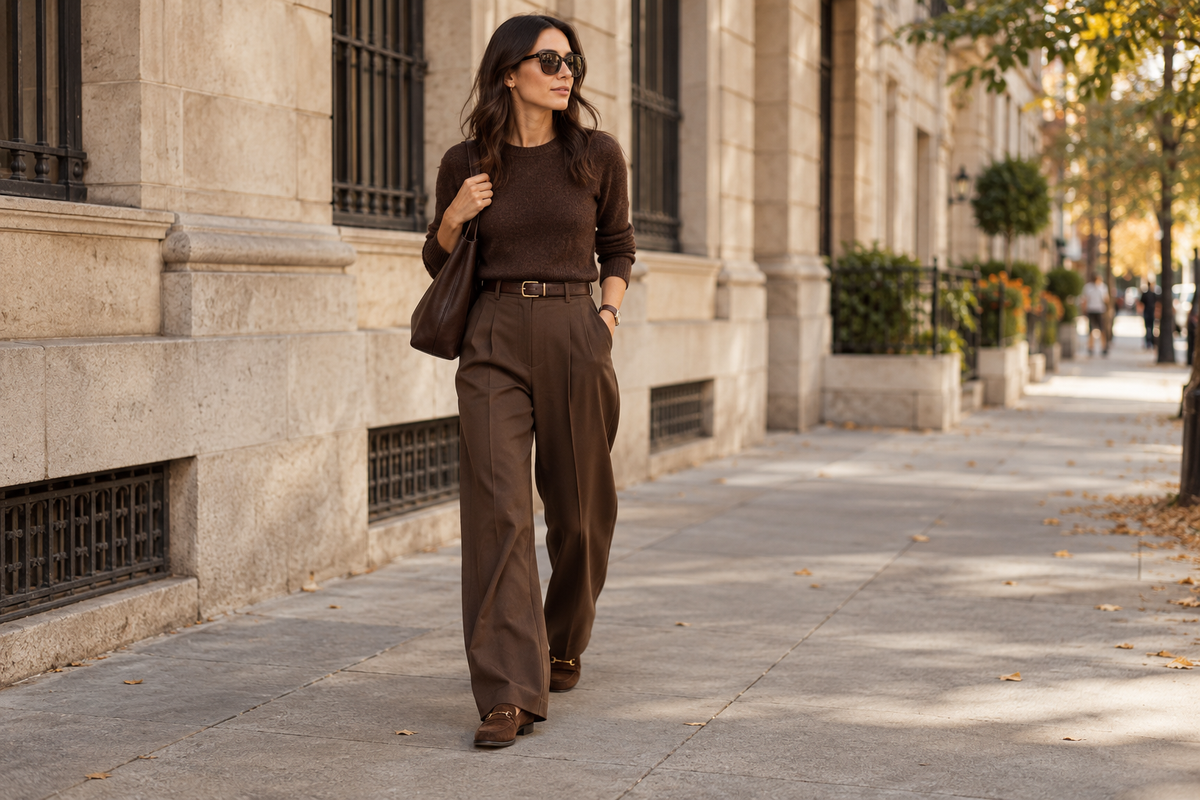
A monochrome outfit is not simply several pieces in exactly the same color. The most wearable versions use a color family—black with charcoal, cream with oatmeal, or chocolate with chestnut—then create interest through texture, shape and a deliberate finishing piece.
That distinction matters because exact matching can make getting dressed harder without making the outfit better. The goal is an intentional tonal column that is easy to repeat with clothes you already own.
Why monochrome outfits sometimes look flat
A one-color outfit usually falls flat for one of three reasons. Every garment has the same smooth surface, every piece has equal visual weight, or the outfit lacks a clear silhouette. Color is only one layer of the styling decision. Once the palette becomes quiet, texture and proportion become more visible.
For example, black knitwear with black tailored trousers and a smooth black loafer reads differently from a thin black tee, thin black leggings and a lightweight flat. Both are monochrome, but the first has surface contrast and structure. The solution is not necessarily more accessories. It is better distribution of texture and shape.
Step 1: Choose a color family, not one exact shade
Start with the largest pieces in the outfit: a top and bottom, a dress and layer, or a knit and trousers. Place them together in natural light. They do not need to match perfectly. They need to look related.
Black and charcoal can work as one family. Cream, oatmeal, ivory and beige can form a soft neutral column. Espresso, chocolate, chestnut and muted camel can create a brown outfit. Slight shade changes often make the outfit look richer because they prevent the body from becoming one uninterrupted block.
Pay more attention to undertone than exact darkness. A warm cream next to an icy gray-beige may feel disconnected, while two different warm neutrals can look intentional. If a piece consistently appears unrelated, move it out of this outfit rather than forcing it because the label uses the same color word.
Step 2: Add one meaningful texture contrast
Choose one visible material change. Pair a knit with smooth trousers, denim with a soft sweater, a leather or leather-like jacket with matte basics, or a tailored outfit with a softer bag. Texture gives the eye somewhere to stop even when the palette stays narrow.
You do not need five different materials. Too many can make a simple outfit feel busy. One primary contrast and one quieter secondary texture are enough for everyday dressing. If your base is already a chunky knit and wool-like trouser, the shoe and bag can stay clean and understated.
For cold-weather tonal outfits, the sweater is often the easiest texture source. The everyday sweater outfit guide shows how to balance knit shapes with trousers, denim and layers.
Step 3: Make a proportion decision
Monochrome color can visually lengthen the body, but proportion still determines whether the outfit feels polished. Decide what the silhouette is doing rather than letting every piece sit at the same volume.
- With wide-leg trousers, try a neater top, a partial tuck or a shorter outer layer.
- With a relaxed oversized knit, use a straighter bottom or show some waist.
- With a fitted column, add one longer or softer layer for movement.
- With a long coat, keep the pieces underneath relatively clear and continuous.
A belt is optional. Use it when defining the waist helps the silhouette, not because every outfit needs another accessory. Likewise, a tuck is a tool, not a rule. The strongest choice is the one that makes the intended line obvious.
Step 4: Use the shoe to ground the outfit
The shoe does not have to match the clothing exactly. It should either continue the color family or deliberately anchor it. Black loafers and ankle boots naturally ground black and charcoal looks. Sand, taupe or beige shoes keep a cream outfit soft. Dark brown footwear can make a chocolate outfit feel finished without matching the trouser shade exactly.
Consider visual weight. A chunky loafer or ankle boot adds structure to soft knitwear and wide trousers. A lighter loafer or simple flat keeps a pale neutral outfit from becoming bottom-heavy. If the shoe is the only high-contrast item, it will become the focal point—make sure that is intentional.
Step 5: Choose one finishing piece
Finish with one useful item: a shoulder bag, structured tote, belt, jacket or restrained jewelry detail. It can be the same color, a neighboring shade or a related neutral. The purpose is to resolve the outfit, not decorate every available area.
A black shoulder bag keeps an all-black everyday outfit direct. A structured tote can sharpen soft cream knitwear. A dark coffee bag or belt creates depth against medium and dark browns. If the outfit already includes a statement jacket, that jacket may be the finishing piece—there is no requirement to add another.
For more ways to use a jacket as structure and texture, see the leather jacket outfit ideas.
Three repeatable monochrome outfit directions
Black / Charcoal Everyday
Start with black trousers or jeans and a black or charcoal top. Add a texture break through knitwear, denim or a smooth jacket. Choose loafers for a cleaner everyday result or ankle boots when the outfit needs more weight. Finish with one black bag.
The common mistake is using several faded blacks that look accidental. Different blacks can work, but make the contrast clear enough to read as tonal. If two pieces are almost—but not quite—the same, separate them with texture or a visible change in proportion.
Cream / Beige Soft Neutral
Build with cream, oatmeal, stone and warm beige. A fine or textured knit is an easy starting point. Keep the bottom in the same warm family and use a sand or beige shoe. A structured bag can stop the outfit from becoming overly soft.
Pale monochrome does not require pristine white. In fact, a range of warm neutrals is often easier to wear and combine. Check opacity in daylight, choose practical fabrics for the day and avoid adding one stark, cool-white item unless you want visible contrast.
Brown / Chocolate Fall
Begin with chocolate or dark brown trousers, then add a knit or top in espresso, chestnut or muted camel. Use a belt only if waist definition improves the outfit. Finish with a dark coffee bag and footwear that belongs to the same brown family.
Brown outfits benefit from material contrast: fine knit with matte tailoring, suede-like footwear with a smoother bag, or denim with leather-like texture. Avoid trying to match every brown exactly. Neighboring shades are what make the color feel dimensional.
Can a monochrome outfit include a different-color coat?
Yes. The monochrome formula can describe the outfit underneath while the coat acts as an outer frame. A camel coat over cream, a charcoal coat over black or a deep chocolate coat over brown keeps the tonal direction intact. A contrasting coat can also work, but it changes the outfit from fully monochrome to a monochrome base with an accent.
What to use from your existing wardrobe first
Before shopping, identify one dependable bottom and two tops in the same color family. Add the shoe you already wear most. Then test a jacket, bag or belt. This gives you several combinations without buying a dedicated “monochrome outfit.”
Only shop when a repeated role is missing. You may discover that the real gap is not another black top but a shoe with the right visual weight, a knit that introduces texture or a bag that finishes several outfits. That is a better purchase than trying to recreate a photo item by item.
A quick mirror check
- Does the outfit read as one color family without requiring exact matching?
- Is there at least one visible texture change?
- Is the silhouette decision clear?
- Does the shoe continue or intentionally anchor the palette?
- Is there one finishing piece rather than several competing ones?
If the answer is yes, the outfit is doing enough. Monochrome dressing works because it reduces one decision—color—so texture, proportion and useful pieces can do the styling work.
Frequently asked questions
Do monochrome outfit pieces have to match exactly?
No. Neighboring shades within one color family usually create more depth than an exact match. Keep the undertones related and use texture to make the variation feel intentional.
How do you keep an all-black outfit from looking flat?
Mix at least one visible texture, make the silhouette clear and use a grounding shoe. Black knitwear, tailored trousers and a smooth jacket or bag create more dimension than identical lightweight fabrics.
What shoes work with a cream monochrome outfit?
Cream, sand, beige, taupe or another related light neutral keeps the tonal line soft. A darker shoe can work too, but it becomes an intentional anchor.
Can a monochrome outfit include a different-color coat?
Yes. The clothing underneath can remain monochrome while the coat acts as a frame or accent. Related shades keep the look tonal; a contrasting coat creates a monochrome base with an accent.