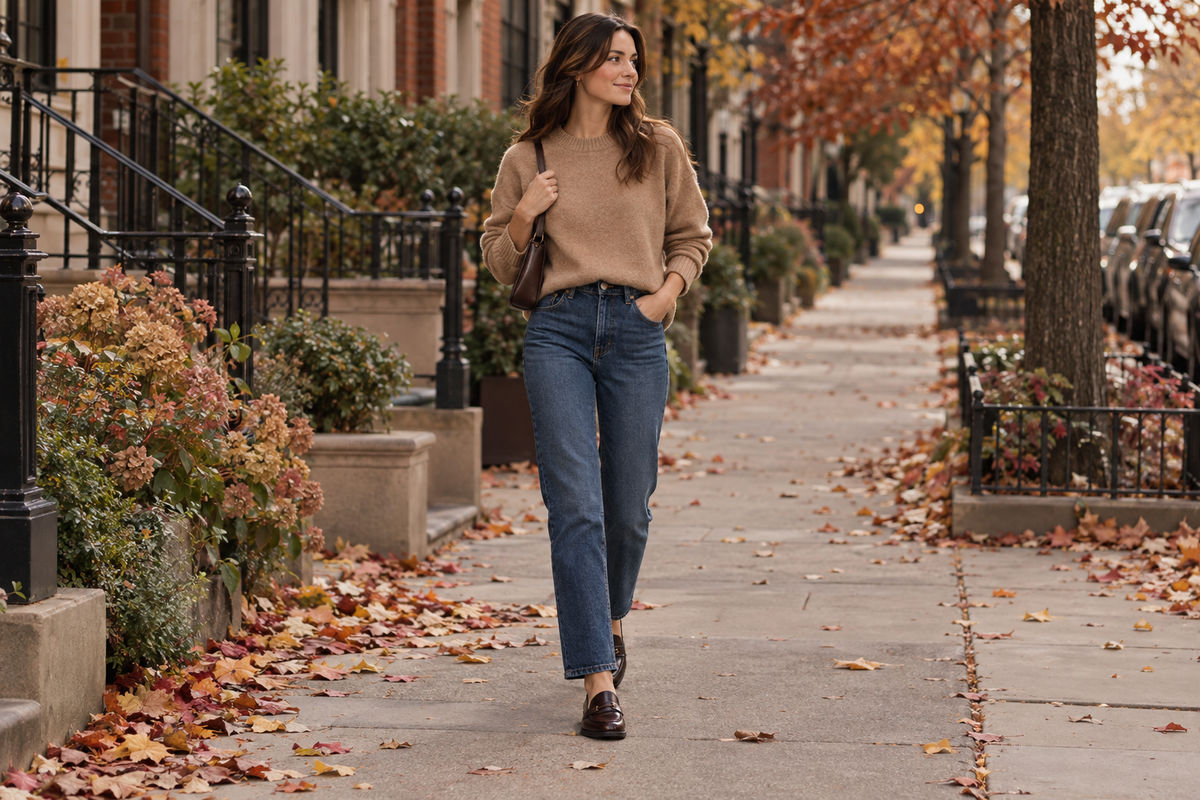
A sweater is an easy fall starting point, but it can make a wardrobe feel repetitive when every knit is paired with the same jeans and the same shoes. The solution is not buying a completely different outfit for each sweater. It is changing the supporting roles around it.
Use the formula sweater → bottom → layer → shoe → bag. The sweater controls silhouette and texture. The bottom changes proportion. The layer adds weather protection or structure. Shoes and bag decide whether the final outfit feels casual, polished or feminine.
The short answer
Start with one sweater silhouette, then create contrast instead of repetition. Pair a relaxed crewneck with straight jeans and loafers for everyday wear, a fine knit with tailored trousers and a structured bag for polish, or a fitted cardigan with a midi skirt and boots for a softer direction. You do not need a different sweater for every outfit.
Choose the sweater by silhouette, not only color
Two beige sweaters can behave completely differently. A fitted fine knit layers cleanly under a blazer or coat. A substantial crewneck works as the outfit’s main shape. A cardigan adds a vertical opening and can reveal a base layer. A turtleneck lengthens the neckline and provides enough visual structure that the rest of the outfit can stay simple.
- Crewneck: the most flexible everyday route for jeans, trousers and skirts.
- Cardigan: useful as a top, open layer or softly structured feminine piece.
- Turtleneck: strong under coats, trenches and simple jackets.
- Oversized knit: best when the lower half has a clear line and the hem does not overwhelm the outfit.
Check the care label and actual measurements. Fiber, gauge and construction affect warmth, drape and maintenance more than the word “sweater” does.
Balance sweater volume with the bottom
Proportion creates most of the difference between a deliberate sweater outfit and a default one. A loose sweater does not always require a skinny bottom, but it does need a visible line: straight jeans, tailored trousers, a defined skirt waist or a legging outfit long enough to feel intentional.
Straight jeans
Straight denim gives a relaxed knit a stable shape without exaggerating either half. A small front tuck can reveal the waistband, but it is optional when the sweater naturally ends at a useful point.
Tailored trousers
Trousers change the same knit immediately. Choose a finer sweater or a controlled tuck so bulky fabric does not collect at the waist. Keep the shoe visually compatible with the hem width.
Midi skirt
A cardigan or fitted knit works naturally with a midi skirt. With a longer sweater, preserve the waist through proportion rather than adding a belt automatically. An open cardigan over a simple base can create the same vertical line.
Leggings
Leggings belong in casual combinations where the sweater or outer layer provides enough coverage and the footwear suits the plan. They are one option, not the default answer to every oversized knit.
Use the layer to solve weather or proportion
An outer layer should have a job. A long coat creates one continuous line. A trench gives transitional structure. A leather jacket contrasts with soft knit texture. A blazer works best over a fine knit that does not bunch through the shoulders and sleeves.
If the sweater is thick, test the layer before committing to the outfit. A jacket that fits over a T-shirt may pull across a substantial knit. Sometimes “no layer” is the cleaner choice when the weather allows it.
For practical ways to combine leather with knits, jeans, trousers and dresses, use the existing Leather Jacket Outfit Ideas guide.
Let shoes set the outfit direction
The same sweater and bottom can move between several settings through footwear:
- Loafers: polished without feeling formal; useful with straight jeans and trousers.
- Ankle boots: add visual weight and weather coverage for fall.
- Sneakers: keep relaxed knits genuinely casual and walking-friendly.
- Taller boots: work naturally with midi skirts and some longer sweater proportions.
Hem length matters. A trouser that pools over a loafer may need a different shoe or tailoring. A cropped straight jean may expose too much ankle for the weather. Solve the physical proportion before adding accessories.
Finish with the right bag shape
A bag does not need to match the shoes exactly. It should support the outfit’s structure and capacity needs. A shoulder bag keeps casual and feminine outfits compact. A tote reinforces a work-ready combination. A crossbody works when movement and hands-free practicality matter.
Avoid choosing a large structured bag for visual polish when you do not need the capacity. Likewise, a tiny shoulder bag may feel impractical for a full workday. Function is part of good styling.
The Everyday Sweater Outfit System
The System below separates five stable roles from the products that may change. Start with the direction closest to your actual week, then adapt color and warmth without rebuilding the outfit from zero.
Three repeatable sweater outfit directions
Casual Everyday
Pair a crewneck sweater with straight jeans, loafers and a small shoulder bag. Add a leather jacket when the temperature or texture balance calls for it. For a more relaxed day, switch loafers to simple sneakers without changing the rest.
Polished Fall
Use a fine-knit sweater with tailored trousers, ankle boots or loafers, and a structured tote. Keep the palette controlled and let the clean trouser line provide the polish. Add a coat or blazer only if the knit fits comfortably underneath.
Soft / Feminine
Combine a cardigan or fitted knit with a midi skirt, boots and a shoulder bag. Keep the waist visible through sweater length, a small tuck or an open cardigan. Texture variation—smooth knit, fluid skirt and substantial boot—prevents the outfit from looking flat.
How to avoid five versions of the same outfit
Change the bottom category
Move from denim to trousers or a skirt before buying another similar knit.
Change structure, not only color
A cardigan, crewneck and turtleneck create more useful variety than three nearly identical crewnecks.
Use footwear deliberately
Loafers, sneakers and boots make the same sweater-and-jeans base read differently.
Add one outer layer only when useful
Do not stack a blazer, coat and scarf simply to make the outfit look styled.
Repeat successful formulas
Use the same role structure with different colors or textures instead of inventing a completely new outfit every morning.
Color formulas that stay easy
Choose two neutrals and one accent for a small fall rotation. Camel, cream and dark denim create a warm casual base. Black, gray and burgundy feel sharper. Navy, ivory and brown are softer without becoming difficult to coordinate.
Monochrome dressing also works when textures differ. An oatmeal knit with cream trousers needs enough contrast in fabric, depth or accessories to avoid appearing like an accidental near-match.
Common sweater styling problems
The sweater feels shapeless
Check the hem placement, sleeve volume and bottom line. A small tuck can help, but so can choosing a straighter bottom, opening a cardigan or pushing sleeves lightly to reveal the wrist.
The outfit looks too basic
Change one structural role: trade jeans for trousers, sneakers for loafers or a soft tote for a compact shoulder bag. Adding several accessories at once usually hides the real issue.
The jacket looks tight over the knit
Use a finer sweater, a roomier layer or no layer. Do not force heavy knit sleeves into a jacket that changes the intended silhouette or limits movement.
The skirt combination feels bulky
Reduce volume at the waist. Use a shorter cardigan, finer fitted knit or open layer rather than forcing a large sweater into a full skirt waistband.
Maintain sweaters so the outfits remain wearable
Air knits between wears, fold pieces that may stretch on hangers, and follow the garment’s care label. Remove surface lint and pills only with a method suitable for that fabric, testing cautiously first. The existing Weekly Wardrobe Reset explains how to prepare frequently worn clothing before the week begins.
What you can skip
- several nearly identical neutral crewnecks
- a new bottom for every sweater
- layers that do not fit comfortably over the knit
- shoes chosen only for the photo rather than the walking plan
- a large bag used solely to make the outfit look polished
- complicated tucks that must be adjusted all day
- trend accessories that do not work with the rest of the wardrobe
Start with the sweater silhouette, then create variety through the bottom, layer, shoe and bag. One useful knit can support casual, polished and feminine outfits when the surrounding roles genuinely change.
Frequently asked questions
How do I make a sweater outfit look less basic?
Change one structural role: switch jeans to trousers or a skirt, change sneakers to loafers or boots, or use a more deliberate bag shape.
What bottoms look best with oversized sweaters?
Straight jeans, tailored trousers, leggings in genuinely casual outfits and some midi skirts can work. The useful choice depends on hem length, sweater volume and whether the waist or leg line remains clear.
Can I wear a leather jacket over a sweater?
Yes, when the knit is fine enough and the jacket has sufficient room through the shoulders and sleeves. Avoid forcing a thick knit into a fitted jacket.