Sweater care becomes much easier when you stop looking for one universal wash setting. The right routine starts with the care label, then controls four things that commonly change a knit: water, heat, friction and unsupported weight.
Use the formula check label → wash → dry → de-pill → store. It works for an everyday cotton sweater, a soft wool knit and an end-of-season reset because the steps stay stable while the method inside each step changes with the garment.
The short answer
Read the care label before washing. Use the least aggressive method it allows, avoid wringing, reshape the sweater and dry it as directed. De-pill only when the knit is clean and fully dry, then fold heavier sweaters for storage. Wash settings, water temperature and dryer use are never universal: the garment label takes priority.
Why sweaters lose their shape and finish
A sweater can look tired for several different reasons. Surface fibers rub together and form pills. A wet knit becomes heavy and stretches while hanging. Heat or agitation can alter some fibers. Residue, body oils and stains can remain through storage. Treating every problem with the same aggressive wash or tool often adds damage instead of solving it.
The aim is not to make every sweater look factory-new. It is to remove soil and loose surface fibers conservatively while preserving the garment’s intended shape, texture and construction.
Step 1: Check the label before choosing a method
Start with the care label and fiber content. Look for the permitted wash method, drying instruction, temperature limit and any warning against bleach, tumble drying or ironing. If the label says dry clean only, or the sweater is embellished, structurally unusual or especially valuable, do not treat a generic online method as permission to wash it at home.
Before washing, also inspect the garment:
- Check for stains that need separate attention.
- Look for loose yarns, open seams, damaged buttons or snagged decoration.
- Measure or photograph the sweater flat if its exact shape matters.
- Empty pockets and close fasteners when the construction calls for it.
Repairing a loose seam before washing can prevent a small issue from becoming a larger one. For an uncertain stain or fiber, conservative professional care is a better choice than escalating heat or scrubbing.
Step 2: Wash only as the garment allows
A “delicates” detergent, mesh bag or gentle cycle does not override the label. These are supporting tools for a permitted method.
If the label permits machine washing
Turn the sweater as appropriate, place it in a suitably sized mesh bag if you want to reduce friction, and avoid packing the machine tightly. Select only the settings allowed by the label. Use the detergent amount directed on its packaging; extra detergent does not automatically produce a cleaner knit and may be harder to rinse away.
If the label permits hand washing
Support the sweater through the process rather than lifting a saturated knit by one shoulder. Use the water temperature and detergent method specified by the garment and product instructions. Move the garment gently through the water instead of twisting, rubbing or scrubbing the knit against itself.
Handle stains before they spread
Blot rather than grind a mark deeper into the fibers. Use a treatment suitable for the garment and test an inconspicuous area when appropriate. If you cannot identify a safe route, pause. Repeated stain treatment can create a faded or felted patch that is more visible than the original mark.
Step 3: Remove water without wringing
A wet sweater needs support. Wringing concentrates force in a small area and can distort the knit. When compatible with the garment instructions, let excess water drain, place the sweater on a clean towel and roll or press gently to transfer moisture.
Return the sweater to its intended proportions before drying. Align the shoulders, straighten the side seams, smooth the sleeves and bring the hem back to its normal width. Do not stretch the fabric to “fix” fit while it is wet.
How to dry a sweater without stretching it
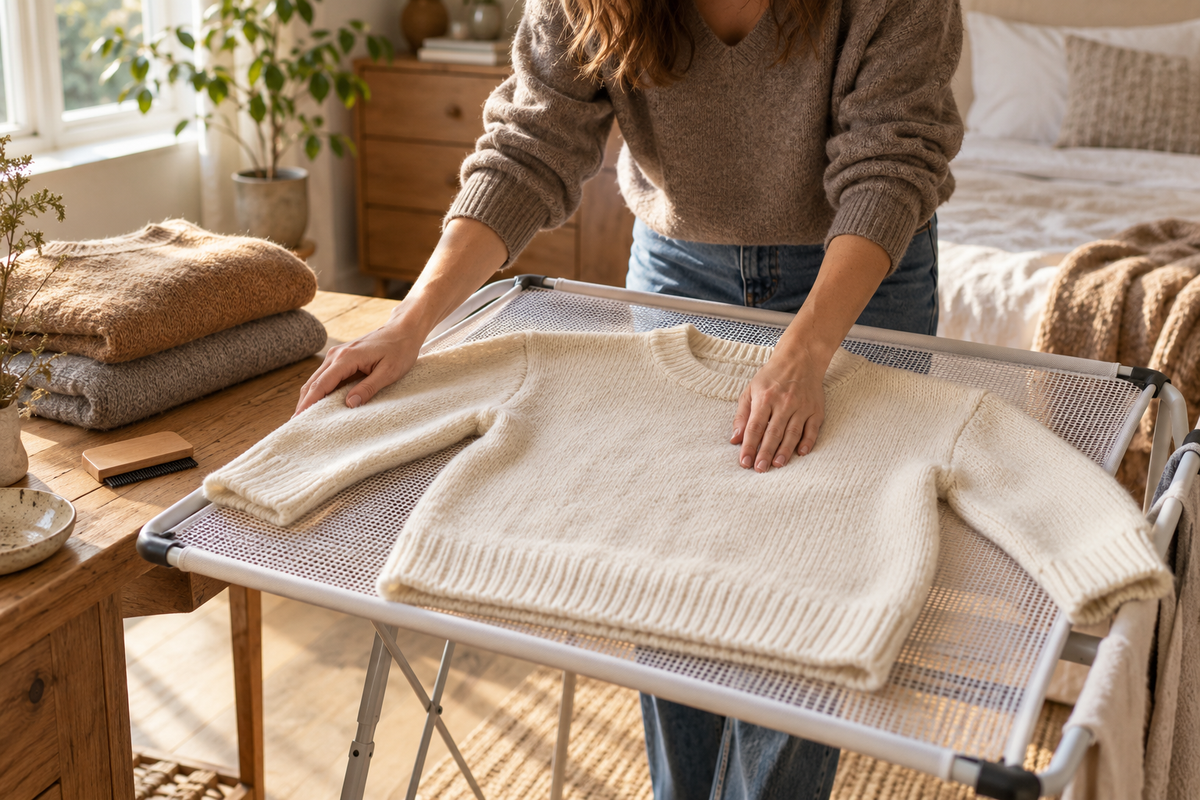
Follow the drying symbols on the care label. When flat drying is directed, place the sweater on a clean towel or ventilated flat drying surface. Keep it supported and arrange it in its natural shape. Turn or reposition it only when the fabric can be handled without pulling.
A wet heavy knit should not usually hang from its shoulders unless its label specifically supports that route. The garment’s weight can lengthen the body, distort the neckline and leave hanger points. Likewise, do not place a sweater in a dryer simply because you want faster results. Use tumble drying only when the label permits it, with the allowed settings.
Dry the sweater completely before de-pilling or storing it. A surface that feels dry can still hold moisture inside a thick knit, so check cuffs, seams and folded edges.
Step 4: De-pill after cleaning and drying
Pilling is caused by loose fibers working to the surface and tangling through wear and friction. Removing pills can improve appearance, but every tool also removes fiber. The goal is a few controlled passes, not aggressive resurfacing.
Lay the sweater flat
Use a firm, stable surface and smooth the area without stretching it.
Test a hidden area
Confirm that the tool moves cleanly and does not snag, thin or roughen the knit.
Choose one appropriate tool
A manual sweater comb offers controlled strokes on compatible knits. A fabric shaver can be faster on compatible sturdier surfaces. Follow the tool instructions.
Use light pressure
Work in short passes and empty or clean the tool as directed. Do not press down to capture every last fiber.
Avoid vulnerable areas
Stay away from loose yarns, seams, holes, embroidery, decoration and very open knits where a blade or comb can catch.
Stop if the surface starts to look thin or if the tool pulls the fabric. Some texture is part of the knit, not a flaw to remove.
The Sweater Care System
The System below keeps the decisions in the right order. Product cards appear only where a detergent, protective bag, drying surface, de-pilling tool or storage format can support the method. You can still complete the routine with suitable items you already own.
Variation 1: Everyday Knitwear Care
For frequently worn cotton, acrylic and common blends, prioritize a repeatable low-friction routine. Check the label each time rather than relying on memory. If machine washing is permitted, a mesh bag may help separate the sweater from zippers and rougher fabrics. Reshape promptly and use a flat dryer only when the label calls for that method.
De-pill when the surface actually needs it, not after every wear. A compatible sturdy knit may suit a fabric shaver, but start gently and stop early. Fold the everyday rotation where you can see it; overcrowded stacks create friction and make pieces harder to use.
Variation 2: Wool and delicate knits
Delicate knits reward restraint. Follow the label’s method, minimize handling while the garment is wet and support its full weight. A simple wash bag is not enough reason to machine-wash a hand-wash-only garment.
For surface pills on a compatible knit, a sweater comb can offer more deliberate control than a powered tool. Test first and make fewer passes than you think you need. If the knit is very fine, loosely constructed, embellished, damaged or expensive to replace, professional care may be the more sensible decision.
Variation 3: End-of-season storage
Do not store sweaters with unresolved stains, body oils or damp areas. Clean each garment according to its own label, allow it to dry completely and complete small repairs. De-pill conservatively, then fold by type or weight.
Use drawers and shelves you already have before buying storage. If seasonal sweaters need to move under a bed or onto a high shelf, measure first and choose a folded storage format that does not crush the collection. Label the contents so you can find and review them.
Cedar blocks are optional. Use them only as their instructions direct and do not treat them as a substitute for clean garments, dry conditions and periodic inspection.
How to store sweaters without stretching them
Heavy sweaters are generally better folded than left on hangers for long periods. Fold sleeves inward, then fold the body once or twice according to the shelf depth. Avoid very tall stacks: the lower pieces become hard to reach and receive unnecessary compression.
If a lightweight sweater must hang, use a method and hanger that support the garment without creating shoulder points, and check it periodically. The construction of the sweater matters more than a universal closet rule.
For a full seasonal edit, use the confirmed Seasonal Wardrobe Transition guide. If the problem is weekly visibility rather than seasonal storage, the Weekly Wardrobe Reset gives you a smaller recurring routine.
Common sweater-care mistakes
Using the same cycle for every knit
Fiber, construction and finishing vary. A setting that works for one everyday blend may be wrong for wool, cashmere, embellishment or an open knit.
Hanging a wet sweater
Water adds weight. Unsupported shoulders and a suspended body can distort before the garment dries.
Wringing to speed up drying
Twisting concentrates stress. Support the sweater and press water out only when the garment instructions allow that handling.
Shaving pills aggressively
A pill remover also removes fiber. Test, work lightly and stop before the surface becomes thin.
Storing before cleaning
Old marks become harder to address, and hidden moisture can create an unpleasant storage surprise.
Hanging every sweater
Long-term hanging can stretch heavier knits and create shoulder points. Fold when the weight and construction call for it.
What you do not automatically need
- a separate detergent for every sweater
- both a comb and fabric shaver for one garment
- a powered tool for a delicate open knit
- new storage when an existing clean drawer works
- vacuum compression for bulky knits
- cedar as a replacement for cleaning and inspection
- high heat to make the process faster
Make sweaters easier to wear, not only easier to store
Care is useful when it returns clothes to rotation. Once sweaters are clean, smooth and visible, build several combinations around the pieces you already own. The published Everyday Sweater Outfit guide shows how one knit can move between casual, polished and softer outfit directions without buying several versions of the same formula.
The best sweater-care routine is not the most complicated. Read the label, control friction and heat, support the wet garment, remove pills sparingly and store clean knits folded where appropriate. A few correct decisions protect more sweaters than a shelf full of specialty products.
Frequently asked questions
Should sweaters be washed by hand or in a machine?
Follow the individual garment label. Some sweaters permit machine washing, some require hand washing and others call for professional cleaning. A mesh bag does not change the permitted method.
How do you dry a sweater without stretching it?
Follow the label. When flat drying is directed, support the whole garment, gently return it to its intended proportions and avoid hanging the wet knit by its shoulders.
Is a sweater comb or fabric shaver better?
It depends on the knit and tool instructions. A comb offers controlled manual passes on compatible fabrics; a shaver can be faster on compatible sturdier knits. Test an inconspicuous area and use light pressure.
Should sweaters be folded or hung?
Heavier sweaters are generally better folded for long-term storage because hanging can create shoulder points and stretching. Consider the garment’s weight and construction.
Should sweaters be washed before seasonal storage?
Yes, when the care label allows washing; otherwise use the specified cleaning method. Resolve stains and let the garment dry completely before storage.